LanguageLanguage
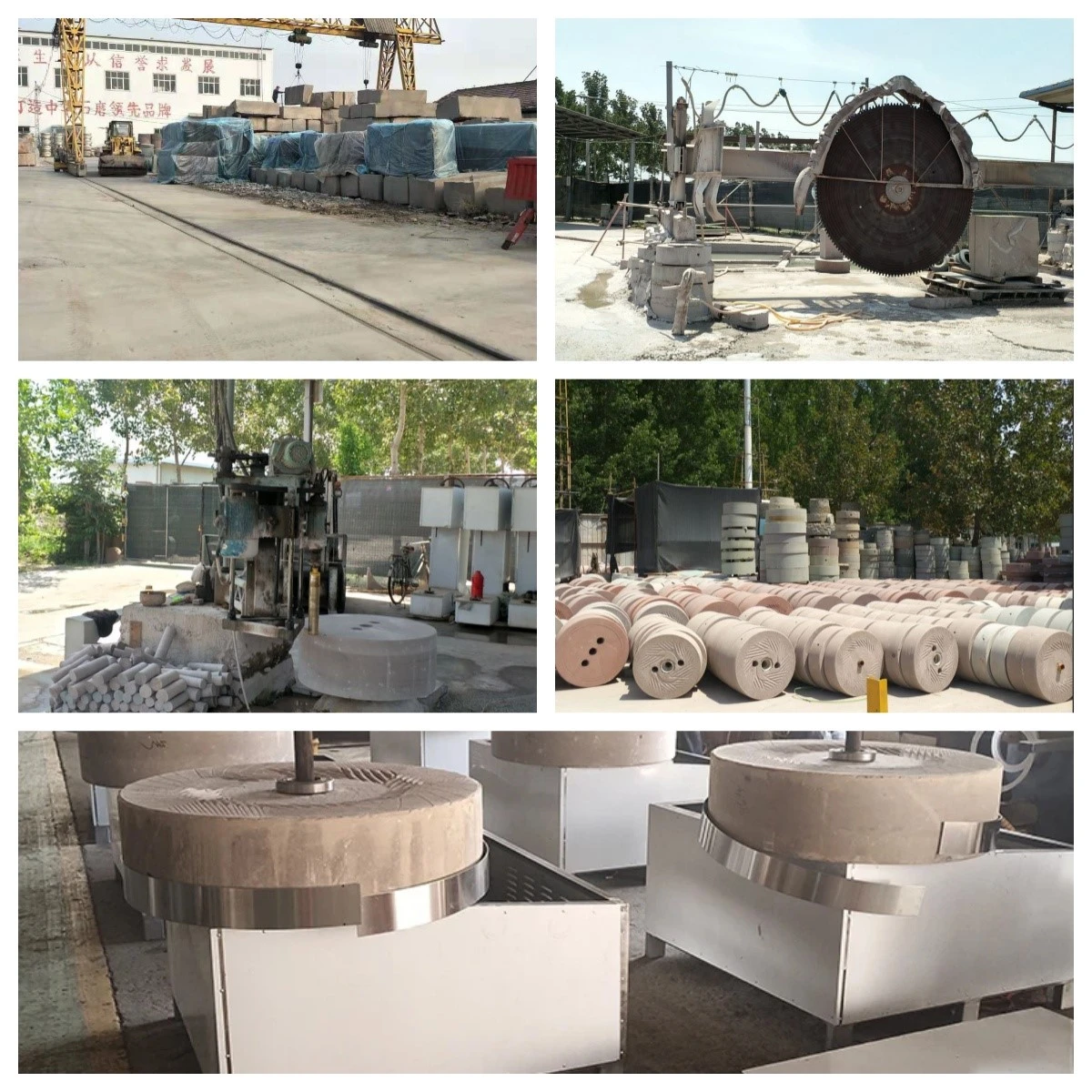
Jinan enying abrasive tools co ltd is an enterprise specializing in the research development production and sales of new abrasive tools products. the company is located in zhangqiu jinan (the beautiful spring city )shandong. it has a 5000 square meter modern standardized production workshop, an internationally leading full-automatic high-precision forming machine and a semi automatic standardized production line. and an annual production capacity of 50 million pieces of all kinds of abrasive tools.
Professional Team
The company has brought together a group of outstanding scientific research, production and sales talents representing the leading level of the industry, and has created a team that unites and forge ahead. The company has more than 50 employees, including 2 professional and technical research and development personnel, 6 professional technicians and professional sales and after-sales service team.
Quality Assurance
More than 40 years of experience in stone grinding production. The products are sold to more than 30 countries and regions such as Oman, Greece, Israel, USA, Sweden, Canada, Italy, Philippines, etc., and have been recognized by many overseas customers. With the latest technology research and development and stone selection, our company has become the leader in China's food machinery, especially the stone grinding industry.
Wide Product Range
Our products main include: Flap disc, flexible flap disc, vertical flap disc, mini flap disc, flap wheel, flap wheel with shank. grinding wheels , wool flap disc , clean and strip disc, non-woven flap disc and other coated abrasive products.
Wide Range of Applications
Our company combines traditional stone grinding with modern machinery to produce electric stone grinding suitable for factories, supermarkets, hotels, homes and other occasions.
What Is Flap Disc
Sanding discs are circular abrasives whose purpose is to remove paint, materials, defects, rust, and corrosion from different surfaces. Sanding discs are attached to an electric-powered sander like an angle grinder or orbital sander. Sanding discs are available in two types: paper discs or film discs. If you want to know the specifications and prices of Flap Disc, please contact us!
Increased Efficiency
Designed for increased efficiency, flap Disc excel in material removal tasks, providing a more efficient and cost-effective solution for those seeking durability and extended use.
Longer Service Life
The abrasive pads on a flap wheel wear down gradually to provide consistent cutting action throughout the life of the wheel. Unlike conventional sandpaper, which wears out quickly and needs to be replaced frequently, flap Disc have a much longer service life.
Wide Range of Applications
Flap Disc come in all shapes and sizes for a wide range of applications. Whether you're working on a stainless steel tube, stainless steel pipe, stainless steel fitting, wood, or plastic, there's a flap wheel to meet your specific needs. This versatility makes the flap wheel ideal for professionals who need a tool that can handle a wide range of materials without compromising performance.
Surface Finish Accuracy
Achieving a smooth and precise surface finish is critical in many industries. Flap Disc with closely spaced abrasive flaps ensure a uniform and controlled sanding or grinding action. This precision is especially valuable when working with intricate details or surfaces where consistency is critical. Traditional sandpaper, due to its inherent limitations, is often unable to achieve the level of finesse that a flap wheel easily provides.
Reduced Heat Buildup
One of the challenges faced by traditional sandpaper is the excessive heat generated during prolonged use, which may lead to distortion or damage to the material. Abrasive flap wheel Disc are designed to minimize heat buildup because they provide an efficient cutting action and more effective heat dissipation. This feature not only enhances user safety but also maintains the integrity of the workpiece.
Time-Saving Advantages
With high material removal rates and consistent performance compared to traditional sandpaper, flap Disc can significantly reduce the time needed to complete a task. The time-saving advantage is a compelling reason for professionals to switch to the flap wheel for projects that demand efficiency without sacrificing quality.
Easy to Use
The flexible nature of the flap wheel allows the Disc to conform to the work surface. They aid in grinding and finishing hard-to-reach areas, such as the inside of tubes, for easier control and less user fatigue.
Cost-effective, Long-term Solution
While the initial cost of a flap wheel may be higher than conventional sandpaper, the long-term benefits far outweigh the investment. The extended life, efficiency, and versatility of flap Disc reduce the number of replacements and improve overall cost-effectiveness. It makes them a smart choice for those looking to optimize their budget without compromising the quality of the finished product.


Flap Discs for Aluminum
Since aluminum is a softer metal, it provides an interesting set of obstacles. For one thing, aluminum can be ground away more easily, so you must be careful of gouging your workpiece. Secondly, the aluminum may "gum up" or clog the abrasive as it wears away. This will significantly shorten the useful life of your flap disc and potentially damage the aluminum from too much heat building up. Both of these issues can be easily mitigated by using the correct disc.
A flap disc such as BHA Flap Disc for Aluminum features a calcium stearate coating which not only protects the workpiece from heat and inconsistent grinding but also prevents loading of the disc which increases the lifetime of the disc.
Just as any other flap discs, these are also offered in a T27 and T29. As previously mentioned the main differences between these two types is the shape. While the T27 is flat the T29 is angled for different types of grinding and finishing.
Surface Conditioning Flap Discs
Surface Conditioning flap discs combine the best of two worlds. They offer the benefits of standard flap discs design which exposes new effect abrasives as old abrasives are worn down, with the flexible surface preparation capabilities of non-woven materials. This means they not only blend and clean surfaces effectively but they also last an extremely long time compared to standard, flat, surface conditioning discs.
These discs are available in coarse (tan color), medium (red - maroon color), or fine (blue color) and work well when used on stainless steel, standard or alloyed steel, non-ferrous metals and alloys, plastic, and even fiberglass.
Felt Polishing Flap Discs
While flap discs are generally constructed using an abrasive, typically one made of pieces of sandpaper, some discs are better equipped for the finer things in life (get it?). Jobs for polishing and extremely fine finishing require an even finer flap material to get glossier polish without using abrasive materials. The new BHA polish plus discs offer just the thing with felt material flaps that are perfect for final stage polishing.
Instead of having a rough abrasive like ceramic or zirconia, felt flap discs are made with a strong Australian wool. This is a flexible and forgiving material that works on almost any surface with polishing pastes or buffing compounds to provide the best end-results possible.
Mini Flap Discs
Sometimes an angle grinder isn't always available for use, you have a job requiring more detailed work, or the job is too small to require a full size flap disc. That's where mini flap discs come in - perfect for a die grinder. They come with all the benefits and versatility of a flap disc but now come in a smaller size and a roloc, quick change backing for use in smaller or tight areas.
Mini quick change flap discs create less loading during use than standard quick change sanding discs creating a more consistent grind. The flap disc construction also expands the lifetime between 10-20 times longer than standard discs. These discs are offered in a 2 inch or 3 inch size and are great for stock removal, finishing and polishing, and blending all in tight areas.
Curved/Rounded Edge Flap Discs
Generally speaking, a flap disc is one of the most versatile abrasive products given their affordability, durability, and grinding abilities. That being said, one of the reasons a metalworker or welder would consider grinding wheels over a flap disc would be the ability for a grinding wheel to grind into tight corners and fillet welds. This is because the grinding surface area of a grinding wheel is around the edge of the disc, which allows it to reach those areas, which a regular flap disc can't.
A new specialty flap disc has been designed to increase the grinding area of a flap disc by wrapping the abrasive material around the edges. These rounded edge/curved flap discs can grind on the face of the disc PLUS using the rounded edge to get into those tight areas.
Disc Shape
Flap discs are mainly available in three common shapes.
Flat Flap Disc or T27 Disc- As the name suggests, these are used on flat surfaces for edge grinding and deburring.
Conical Flap Disc or T29 Disc- These discs are perfect for surface conduct and aggressive grinding. They are also used for heavy stock removal in different grinding applications.
Compressed Flap Disc- This disc can perform both edge grinding and deburring as well as equally effective for heavy weld removal.
Bonding And Backing Materials
Poly-cotton fabric and polyester fabric are the two most common bonding and backing materials used in flap discs.
Backing Plates
Flap disc backing plates are typically made of three main components: plastic, metal, and fiberglass.
Flap Density
The total amount of abrasive area used by the flap on the disc is known as the flap density. The number of flaps used, the angle at which they are used, and the space between flaps all affect the size of the abrasive area. Low-density flap disc is good for heavy-duty applications and fast stock removal, while high-density flap discs are perfect for working on curved and irregular surfaces.
Grain Types
Flap discs are designed with different types of abrasives including ceramic, zirconia, and aluminum oxide grains. You can choose the grain material according to your application requirement.
Abrasive Grit and Disc Size
Abrasives are available in various grit range from coarse, to medium and fine. A high grit number means a small abrasive grain. Similarly, a low grit number means a large abrasive grain. For fine abrasive products choose high grit or small grain size. Flap disc with coarse abrasive grit is perfect for heavy stock removal and aggressive grinding. And, flap disc with medium or fine abrasive grit is perfect for deburring, mixing, and finishing applications.
Choosing the Right Abrasive
The abrasive material of flap discs largely determines its effectiveness; the first types are:
Zirconium Alumina- It is a mix of zirconia grain and alumina with self-sharpening capabilities. This sort of flap provides a high bargain rate for rock bottom cost possible. It's tough, durable, and immune to heat, making it an ideal choice for low-carbon steel and carbon applications.
Ceramic Alumina - This grain is the newest innovation in abrasives, and it's especially effective on stainless and high-alloy materials. It provides the fastest cuts also as maximum utilization of the entire grain.
Aluminum Oxide- Aluminum Oxide Flap Disc is the oldest grain in metalworking, and it's highly recommended for little, low-cost tasks.
When choosing the three types, you would like to think about increased longevity, reduction in downtime, and inventory reduction for different products. The foremost important thing is to seek out the flap disc that meets the precise requirements of any application within the specified time and budget.
Proper Flap Disc Grit Size
Choosing the proper grit size goes to work out how fine or coarse. The sizes range from 4 to 7 inches to suit various right angle grinders. There also are custom flap discs that are made to satisfy specialized applications. Understanding the grit sizes will ensure the simplest grinding and finishing solution for metalworking.
Flap discs are designed to be used on right-angle grinders at angles from 5 to 35 degrees.
Grit size is the final component an end-user must select to match a flap disc to an application. The standard range is from 24 to 120 grit.
When performing heavy metal removal, selecting too coarse a grit can cause shelling, cautioned Norman of 3M, which offers abrasive as rough as 36 grit.
Shape Of The Flap Disc
Flap discs are used on right angle-angle grinders, and that they are designed with a central point that permits work to be performed on the flaps. The flaps are often aligned at angles from 5 to 35 degrees.
Picking the proper Flap Disc shape, conical shape (Type 29), or a flat shape (Type 27) provides different performance features.
Type 29 Conical flap discs are the most straightforward choice for aggressive stock removal. Conical flap discs have angled flaps and can be used on both contoured and edge work. They're the simplest choice when speed and stock removal are primary considerations.
Type 27 Flat flap discs are the simplest choice for finishing. Flat flap discs are used totally on flat surfaces. They're the simplest choice for blending and smooth finishing.
Backing Plate Material
When selecting a flap disc paint removal, you ought to also consider the fabric used on the backing plate where the abrasive flaps adhere. The backing plate offers stability during usage, and it's available in the following material types:
Plastic Backing Plates - Plastic backing plates are getting more popular as they are comfortable to use and trimmable, which allows more use of the flaps, especially for blending and finishing.
Fiberglass Backing Plates - Fiberglass backing plates help in absorbing vibrations. Fiberglass is the most popular material because of its high strength and lightweight.
Aluminum Backing Plates - Aluminum backing plates are the least popular, but are good in applications demanding extra high strength and rigid support. While not consumable during use, an aluminum plate can be recycled.
The Density Of The Flaps
Standard density: A typical density is best fitted to light-duty applications requiring fast stock removal.
High density: As the name denotes, this density is applicable when performing on high-demanding applications and finishing as curved and uneven jobs.