LanguageLanguage
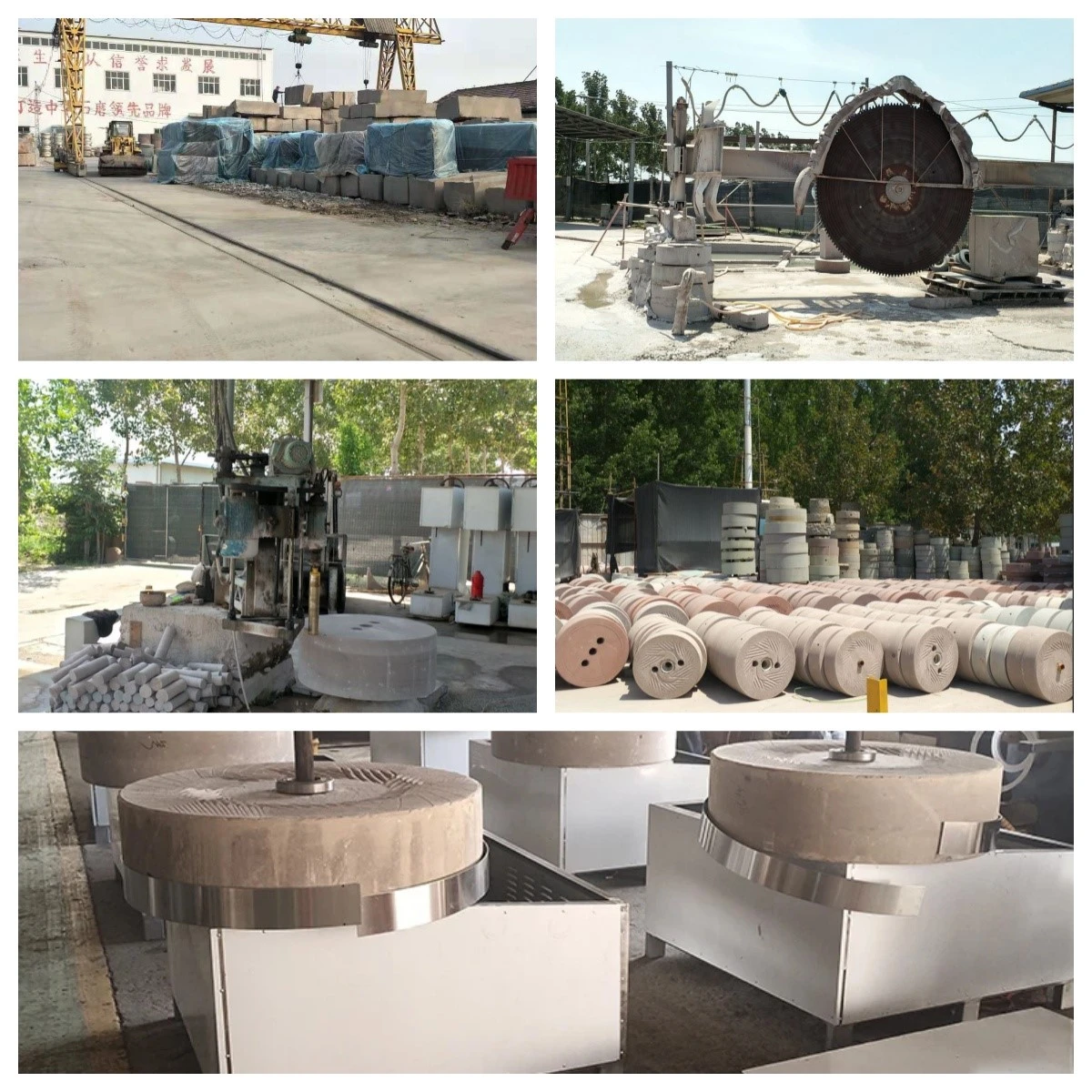
Jinan enying abrasive tools co ltd is an enterprise specializing in the research development production and sales of new abrasive tools products. the company is located in zhangqiu jinan (the beautiful spring city )shandong. it has a 5000 square meter modern standardized production workshop, an internationally leading full-automatic high-precision forming machine and a semi automatic standardized production line. and an annual production capacity of 50 million pieces of all kinds of abrasive tools.
Professional Team
The company has brought together a group of outstanding scientific research, production and sales talents representing the leading level of the industry, and has created a team that unites and forge ahead. The company has more than 50 employees, including 2 professional and technical research and development personnel, 6 professional technicians and professional sales and after-sales service team.
Quality Assurance
More than 40 years of experience in stone grinding production. The products are sold to more than 30 countries and regions such as Oman, Greece, Israel, USA, Sweden, Canada, Italy, Philippines, etc., and have been recognized by many overseas customers. With the latest technology research and development and stone selection, our company has become the leader in China's food machinery, especially the stone grinding industry.
Wide Product Range
Our products main include: Flap disc, flexible flap disc, vertical flap disc, mini flap disc, flap wheel, flap wheel with shank. grinding wheels , wool flap disc , clean and strip disc, non-woven flap disc and other coated abrasive products.
Wide Range of Applications
Our company combines traditional stone grinding with modern machinery to produce electric stone grinding suitable for factories, supermarkets, hotels, homes and other occasions.
What Is Sanding Disc
Sanding discs are circular abrasives whose purpose is to remove paint, materials, defects, rust, and corrosion from different surfaces. Sanding discs are attached to an electric-powered sander like an angle grinder or orbital sander. Sanding discs are available in two types: paper discs or film discs. If you want to know the specifications and prices of Sanding Disc, please contact us!
Sanding disc combines the highest technologies for automotive repair. Its long-lasting ceramic abrasive grain and multi-hole pattern for superior dust extraction make the disc ideal for paint removal, rough body filler shaping, fine feather-edging or final prep before blending or priming. The hook and loop or PSA attachment makes for quick disc change-outs.
Very Versatile
Disc sanders are useful for any workshop because of the wide variety of projects they can assist with. No matter what type of metal you work with, this type of sander can help you tackle almost any project. On top of this, you can also outfit this tool with various sandpaper discs that have different types of grit. Depending on the strength of the sanding you need for a specific material, you can adjust the disc sander to meet that need with its versatile design. You can even find combination belt and disk sanders to further increase your production options.
Easy To Use
Another benefit of the disc sander is that you have more control over the material you're sanding, making this tool extremely easy to use. Once activated, this trustworthy sander doesn't require any handling and stays stationary, meaning that you can maneuver your sanded materials with both hands for more control. Just watch to make sure that you don't get your hands or clothing too close to the spinning grit to avoid accidents. But with proper training, even beginners can use this sander safely.
Boosts Production
Because it's so easy to use, the disc sander can help boost productivity in your shop as well. Having more control over the surface sanding of your project allows you to achieve your goals faster and move on to the next steps. With the different speed and grit settings on this sander, you also have more control over the speed at which you're physically sanding down your projects. This freedom can also increase production.

Resin Fiber Discs
Resin fiber discs are made up of abrasive grains bonded with resin to a vulcanized fiber backing. They are cost effective sanding disc used for general purpose grinding and finishing on metals, plastic, and woods.
These discs attach to angle grinders with an appropriate backing pad. Resin fiber discs are heavy-duty and abrasive, and are expertly manufactured for a range of applications ranging from surface blending to heavy stock removal.
Flap Discs
Flap discs are an innovative type of sanding/grinding wheel popular abrasives among welders and metal fabricators. They are made up of overlapping flaps of coated abrasive cloth strips fixed to a firm backing.
As each layer of abrasives wear down from use, new flaps of untouched abrasive grains come to the top, keeping a consistent cutting performance. Compared with grinding wheels, the flaps give you more flexibility on contoured work pieces and a softer grind.
Hook and Loop Discs
Hook and loop sanding discs are made up of abrasive coated cloth, paper, or film with a backing material similar to Velcro. There are a system of small hooks and loops that are used to affix the sanding disc to the sander. This makes it extremely easy to change the disc, without having to sacrifice on the quality of the disc used. If your sander isn't made to be used with hook and loop sanding discs, you can purchase a converter pad which will enable them to fit on your sander.
Hook & loop discs come in a variety of sizes to fit die grinders up to larger angle grinders. This gives you the ability to cover large areas or narrow in on a smaller detailed sanding task.
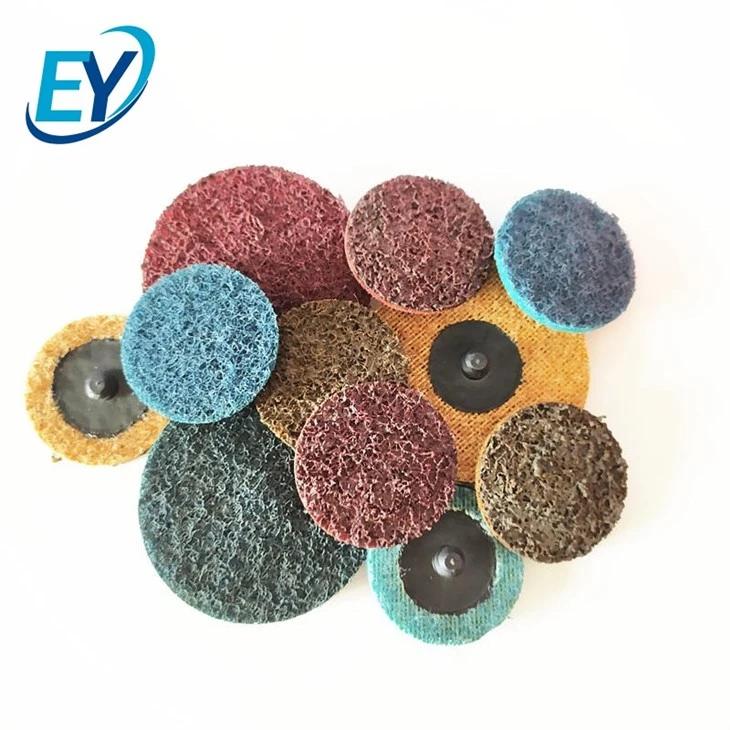
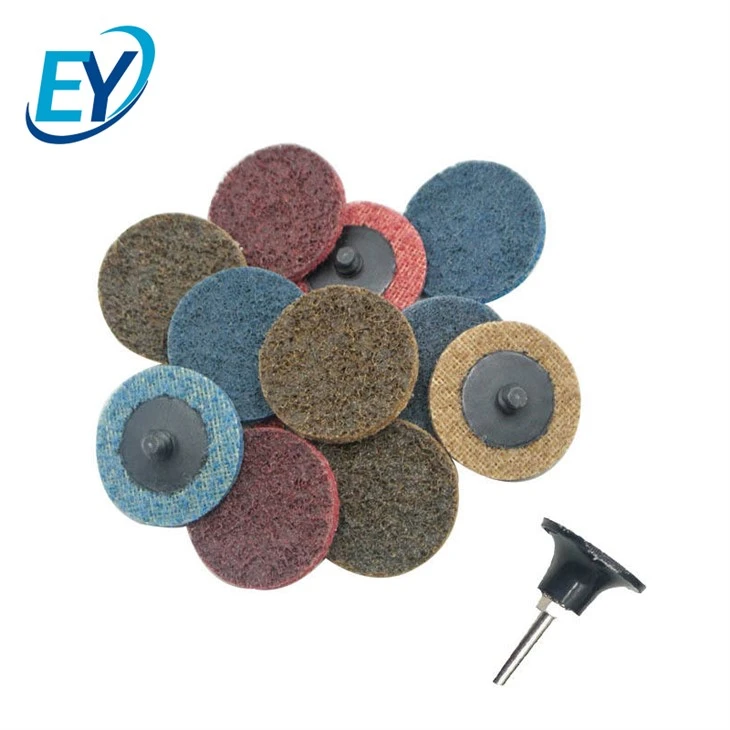
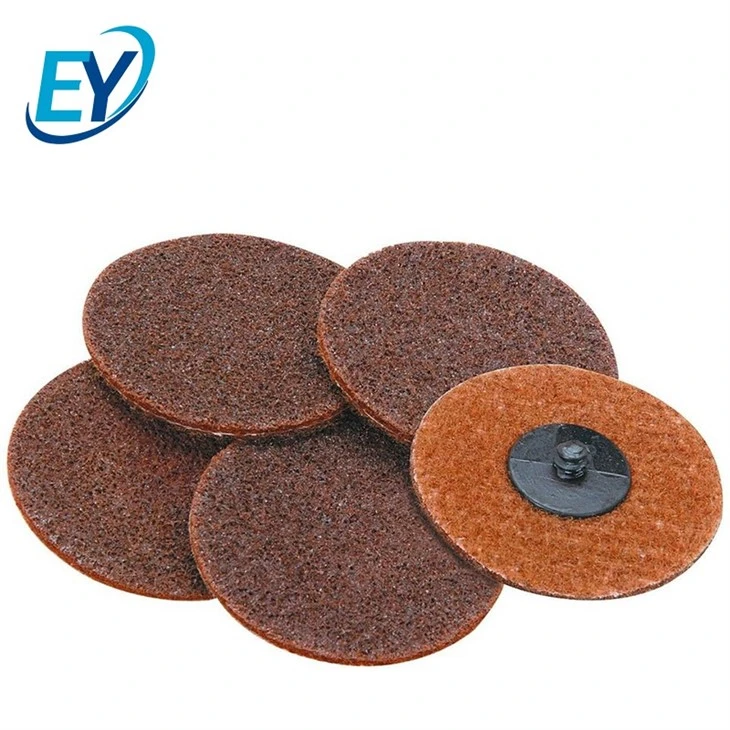
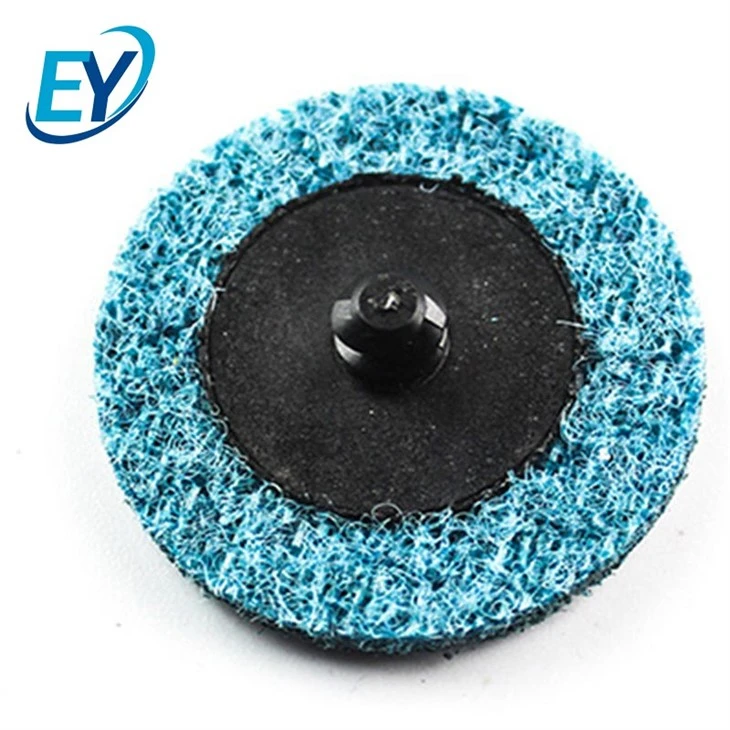
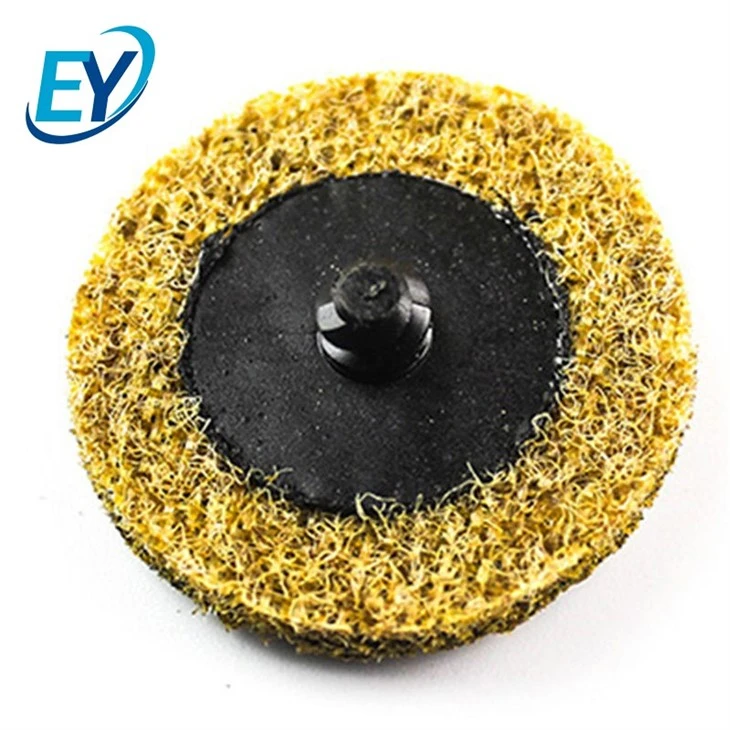
Quick Change Discs
Quick change discs are the go-to choice for grinding, deburring, and blending in small areas and tight corners. The simple to use fastening system makes quick change discs the ideal option for users looking to maximize their productivity. These discs are great for grinding, deburring, and blending in tight spaces or on small surfaces
PSA Discs
PSA (short for pressure sensitive adhesive) sanding discs are very popular among woodworkers and auto body professionals that typically work on flat surfaces. They have a sticky backing that creates a firm attachment to the power sander.
These types of discs are suitable for prolonged usage, with many workshops opting to use them until the abrasive is completely spent.
Semi-Flexible Discs
Semi-Flexible Discs are heavy-duty grinding discs made with silicon carbide abrasive and a ribbed, semi-flexible backing. These discs are designed for aggressive stock removal on hard materials like stone, concrete, and masonry.
The ribbed design helps channel debris away from the surface, reducing clogging and improving grinding efficiency. Their semi-flexible nature allows them to conform slightly to the surface, making them ideal for uneven materials.
Surface Conditioning Discs
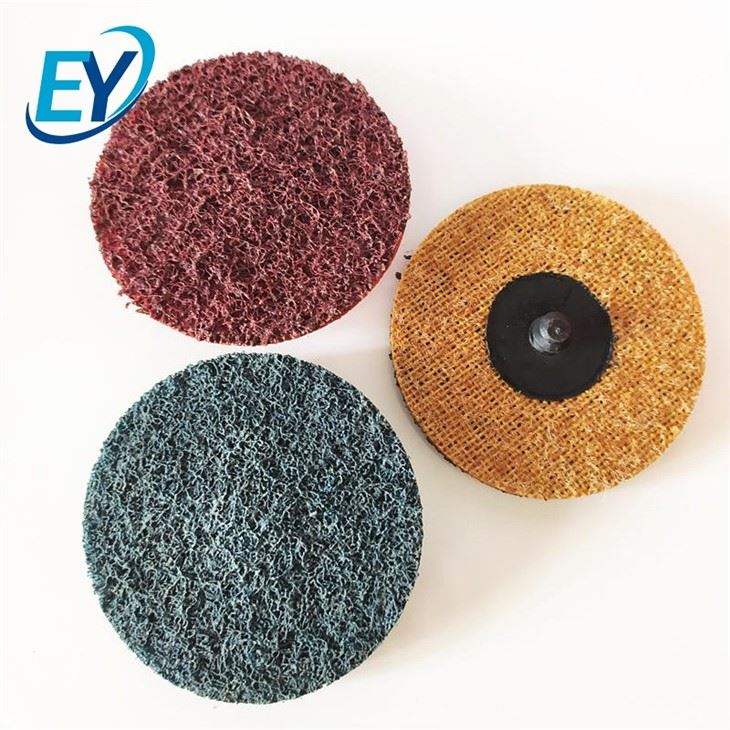
Surface conditioning discs include a variety of specialized discs for surface preparation and finishing tasks. Unlike the coated abrasives we've mentioned so far, they are made up of non-woven webs of nylon fibers impregnated with abrasive grains.
They are used for various metal tasks like rust removal, polishing, and deburring. Their open structure design minimizes loading/clogging, reduces heat build-up, and efficient removal of materials like paint and rust without damaging surfaces.
Paper Discs
Paper discs are the traditional dry sanding product for random orbital and rotary sanders. Available in adhesive back and hook & loop attachments in a variety of sizes, hole patterns and abrasives types to give you the highest performing and broadest selection for light stock removal to fine finishing on wood, plastic, fiberglass, composite, primer and sealers. For maximum dust extraction, our Cyclonic technology extracts 60% more dust for cleaner work surface and environment.
Cloth Discs
Cloth discs are the traditional metal sanding product on random orbital and stationary disc sanders in conjunction with a rubber back-up pad that delivers the rigidity for hard to grind alloys and steels. They offer strong tear and edge-fray resistance.
Foam Discs
Foam discs are engineered for moist finishing clear coats, varnishes, composites and gel coats to produce a semi-polished surface for quick and easy buff out. The design provides equal pressure that eliminates pigtails and provides a uniform scratch patter. The integrated foam backing conforms to contours.
Net Discs
Net discs are designed with an open mesh backing allowing for maximum dust extraction, creating a cleaner, healthier work environment. These discs are made to last and produce a fine scratch pattern for a better finish.
Main Applications Of Sanding Disc
Cutting
Some abrasive discs are meant to cut through metal. Depending on the metal, some abrasives can be used or not. For example, zirconia would be used for cutting mild steel, while aluminum oxide would be the choice for cutting other metals.
Grinding and Polishing
Grinding a surface or piece means removing stock or shaping it. On the other hand, polishing refers to the smoothing or blending of a surface or piece.
Both operations can be made with the same type of abrasive disc, but the grain must differ. While grinding (for example to weld blending) would require a coarse grain, polishing would need a finer grain.
Some surfaces might need to be polished to offer a better appearance and others would need some polishing to be prepared for a new coating.
Rust and Contaminants Removal
Rust is something that can be over just a part of a surface or piece. That means that the abrasive used for rust, scale, or other contaminants removal should be mild enough to clean but preserve the entirety of the piece.
Deburring Equipment
Sometimes in the production process, a piece can develop heavy burrs or even sharp edges. Then, some deburring might be needed to bring the piece to the ideal finish. In particular, flap discs are the most commonly used abrasives for this operation.
Choose the Right Grit
Using the right grit can lead to efficient sanding and slower disc deterioration. Always start with the manufacturer's recommendations for the material you're working on. Use a coarser grit for initial sanding and switch to a finer grit for finishing.

Apply Even Pressure
Excessive pressure can cause the disc to wear out faster, resulting in an uneven finish. Apply consistent, moderate pressure while sanding. Let the abrasive do the work rather than forcing it into the material. Keep It Clean. Dust and debris can clog the sanding disc. Use a rubber cleaning stick or compressed air to remove buildup from the disc periodically.
Maintain Consistent Speed
Variable speeds cause inconsistent wear and may damage the sanding disc. Use a constant, moderate speed for a uniform finish and longer disc life. Consult the manufacturer's guidelines for optimal speed settings.
Proper Installation
Improperly installed sanding discs can wobble or detach, causing uneven wear. Center the disc and securely attach it to the backing pad. Double-check for any signs of wobble before starting the machine.
Store Properly
Improper storage results in moisture damage or warping of the sanding discs. Store your sanding discs in a cool, dry place away from direct sunlight. Please keep them in their original packaging to maintain their shape.

Regular Inspection
Regular checks can help you spot signs of wear or damage early, preventing potential accidents. Inspect the sanding disc for tears, cracks, or excessive wear before each use. Replace it immediately if you notice signs of damage.
The durability of Sanding Disc can be influenced by various factors such as the quality of the abrasive material, the strength of the backing material, and the product design. Here are some ways to evaluate the durability of different types of Sanding Disc:
Check the abrasive material: The abrasive material is a crucial element of the hook and loop Sanding Disc responsible for cutting or sanding. It's vital to inspect Sanding Disc that incorporate high-quality abrasive materials such as aluminum oxide, zirconia alumina, or silicon carbide. These materials are known for their toughness and durability.
Inspect the backing material: The backing material is part of Sanding Disc that supports the abrasive material. It is important to choose a backing material that is strong and tear-resistant, such as cloth or paper. Avoid Sanding Disc with weak or flimsy backing materials as they can quickly wear out or tear during use.
Look at the design: Some Sanding Disc are designed with special features that enhance their durability. For example, some Sanding Disc have a stearate coating that prevents clogging and extends the life of the abrasive material. Others such as wet dry Sanding Disc have a waterproof backing that resists tearing and can be used for wet sanding.
The last thing any DIY enthusiast or professional wants is to have their Sanding Disc wear out quickly, resulting in wasted time and money. In this section, we'd like to explore some techniques for reducing the amount of pressure on the Sanding Disc, the proper use of sanding blocks and Binictools, and strategies for minimizing heat buildup during sanding.
One of the ways to extend the life of Sanding Disc is to reduce the amount of pressure applied during sanding. To achieve this, it is essential to use a light touch and allow the Sanding Disc to do the work rather than pushing down with excessive force. This can be done by using sanding blocks or sanding tools with a lighter grip to evenly distribute the pressure across the surface being sanded. By minimizing the amount of pressure, the Sanding Disc is less likely to clog, and it can last longer, leading to a more effective sanding process.
Selecting the right sanding tool such as sanding sheet rolls, requires considering multiple factors, including the size and shape of the surface that needs sanding and the type of Sanding Disc in use. For larger areas, a power sander may be a suitable option, while a sanding block or hand sander may be more effective for smaller or intricate surfaces. The tool should be comfortable to grip and allow for precise control.
To minimize heat buildup during sanding, it is recommended to use a light touch and take frequent breaks to allow the surface and Sanding Disc to cool down. Choosing the right Sanding Disc grit and backing material for the job can also reduce heat buildup. Additionally, using a sanding lubricant or water can help to keep the surface and Sanding Disc cool. It is also important to keep the.